
Valentine’s Day was last Monday, and believe it or not, I went on several dates in one evening. Yes, like many a smelly gamer, I decided to experiment, playing some of the worst dating simulators this world has to offer. What makes these games enjoyable is their absurdity, yet that absurdity often entails moments of ugliness, where consent is questionable or downright non-existent. Such moments in the games were uncomfortable, but they made me think about the nature of consent in the romantic subplots of mainstream games. In my experience, romances that challenge the power of the player end up being more interesting and fulfilling than those that take for granted the player’s control and sexual magnetism. To demonstrate, I’ll look at two examples of video game romance from the studio BioWare, a giant in the world of simulated affection. The first example is from Mass Effect, while the second is from Dragon Age.
Samara (Mass Effect)
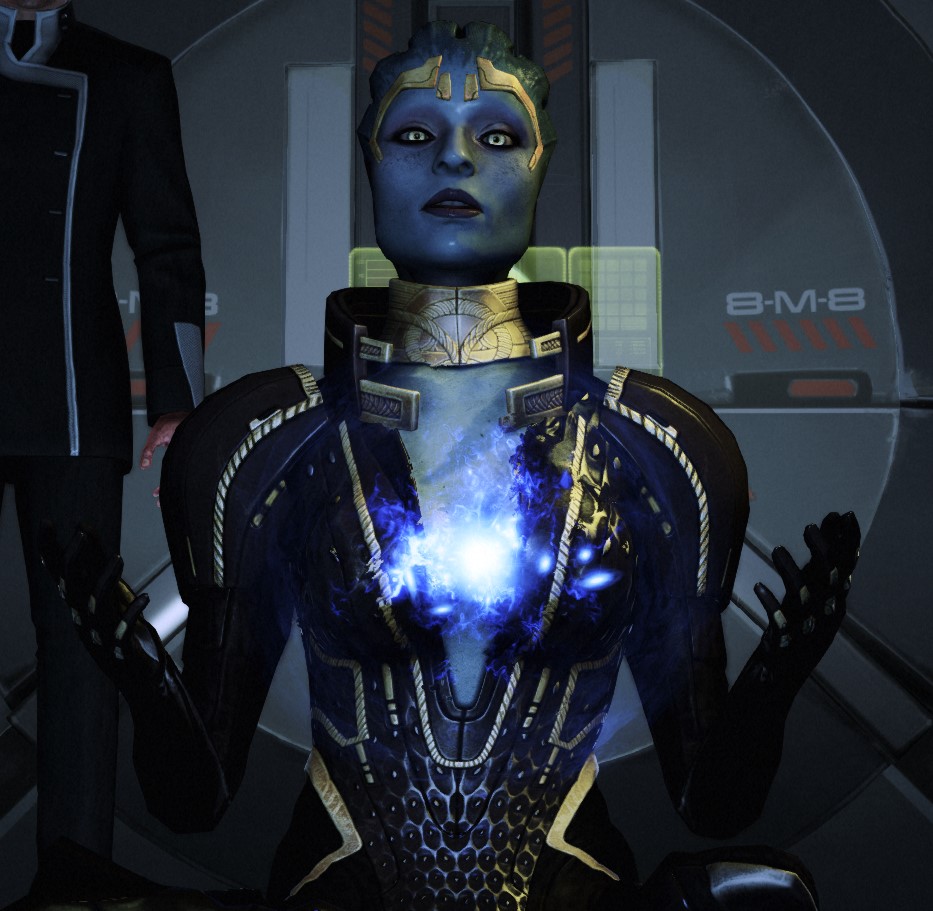
Players of the Mass Effect original trilogy will be familiar with Samara, an Asari justicar and a follower of the player in Mass Effect 2. Wandering justicars like Samara live under a strict moral code that essentially boils down to protecting the innocent and punishing the wicked, whatever the cost. To carry out her duty no matter what, Samara must suppress personal feelings that could interfere with the responsibilities of a justicar. After all, as she tells the player character, “If I must kill a man because he has done wrong, do I really wish to know that he is a devoted father?” As such, while Samara can maintain a cordial relationship with the player, asking her whether she is interested in a romantic relationship initially results in an amused “I’m flattered, but no.” Under the traditional Western RPG structure, the player holds all agency of choice, and as such their advances aren’t often rejected. Still, Samara sticks to her guns. For a while.
If pressed, Samara will admit to conflicted feelings in Mass Effect 2, but she continues to say no. Yet should the player continue romantic advances in the third game, their character will hold Samara by the arm as she attempts to leave an apartment, telling her to “embrace the way we feel right now.” In this final confrontation between the two characters, the game rewards the player with tender music and a passionate kiss with Samara. Not only is this scene uncomfortable because viewing it requires that the player ignore Samara’s multiple objections, but it also degrades her character. Samara is unique among the Mass Effect ensemble cast because she forgoes the kind of close personal connection that the player can build with their other squad-mates. Many of these other squad-mates fight alongside the player in pursuit of a peaceful future, and as such, it makes sense that they would be open to the possibility of emotional attachment with their comrades. Samara is different; for justicars like her, there is never peace. As she tells the player, the demands of such a life are “lonely and uncompromising, often to the point of pain. But following the code has left me with no regrets.” Should the player override her objections to a romantic relationship, they not only raise problems with consent, but they compromise the core of Samara’s character.
Morrigan (Dragon Age)
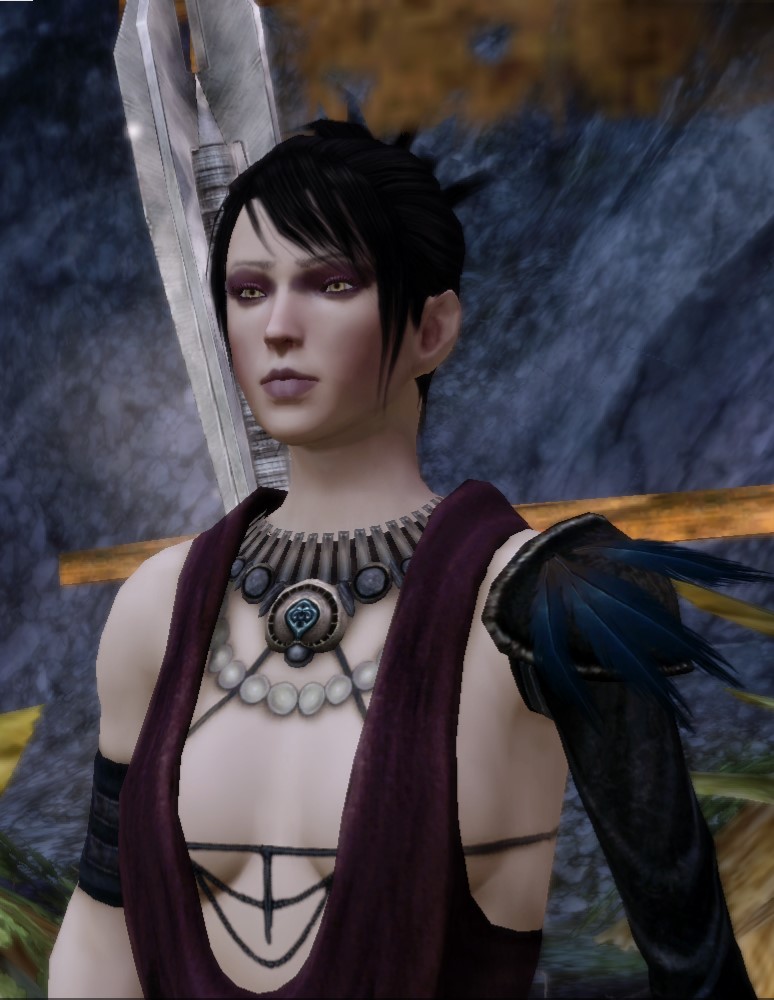
Morrigan is a major character in Dragon Age Origins, the daughter of an infamous witch and a powerful mage in her own right. Based on appearance, Morrigan seems tailor-made for the male gaze, (the impracticality of her outfit makes Samara’s plunging neckline seem like a sensible tactical decision), yet the strength of her character is impressive. Given that Morrigan was raised in a harsh and solitary environment, she adopts a survival of the fittest mindset that often clashes with the rest of the party, all of whom were brought up as members of a larger community. Though Morrigan’s attitude may soften throughout the game, the changes in her character are subtle and gradual. Crucially, she never abandons her own agency, something the player discovers should they choose to pursue a romantic relationship with her.
Like Samara, Morrigan’s attraction to the player presents her with a conundrum; though it is not an official code, Morrigan still has her own set of values, and for her, the most important of these values is personal freedom. While Morrigan may come to love the player, there is no room for her autonomy in a relationship wherein she is, literally, an NPC. As such, Morrigan will end her romantic relationship with the player during the last act, saying that her own agenda requires that she leave after the final battle. As Morrigan tells the player, “caring for you… was not part of the plan;” while her care is genuine, her own goals take priority. The Morrigan that many players of Dragon Age fall in love with is someone who would not tie herself down for anyone. By leaving, Morrigan claims equal power in her relationship with the player, remaining true to her character and thereby making the relationship feel more authentic.
Yet not all the best romantic subplots in gaming are doomed to end in heartbreak. The player can reconcile with Morrigan in the post-game DLC Witch Hunt, in a way that I believe is in keeping with her character, though some have disagreed. Having tracked down Morrigan, the player can resume their relationship, but only by joining her as she enters a portal to another world. Entering this new world means leaving behind the one where the player holds ultimate power, and if the player does this, it means the end of their character’s journey. When I watch the player character following Morrigan’s lead through the portal, in a reversal of the power dynamics that characterize their early relationship, it becomes clear to me that the most satisfying romantic subplots are those that feel like a created partnership, rather than a pre-existing inevitability.
Then again, take all this with a grain of salt. After all, I’ll be playing more disgusting dating simulators pretty soon.

 The Third Medium
Leave a comment