
I first played Dragon Age: Origins (DAO) in 2013, four years after the game’s initial release, and two years after Skyrim claimed the title of the West’s premier RPG through its massive commercial and critical success. I enjoyed DAO well enough, but seeing as I had just turned twelve and still harboured dreams of casting spells and slaying dragons, I much preferred Skyrim. Its first-person camera and blank-slate character design made it easy to project myself into the gameworld, which was the top priority for my “heroic” twelve-year-old self. Fast forward five years and I was dabbling with gaming once again after a long hiatus. I had various mental health issues in my teen years, mostly relating to OCD, and I was no longer looking to bring myself into a fantasy world but to escape myself entirely. Instead of returning to Skyrim, I dove headfirst into a game that probably remains the only RPG to rival Skyrim’s widespread popularity: The Witcher 3. Players of The Witcher 3 have little opportunity to self-insert, forced as they are to roleplay the witcher Geralt of Rivia, a very detailed and likeable protagonist who gave me the perfect opportunity to shed my own skin when I needed it most. Yet my time with The Witcher 3 was a blip on the radar as I entered university and fell out of gaming once more. However, with the onset of the COVID-19 pandemic, and a great deal of free time, I’ve finally revisited a game that came with some vague but fond memories: DAO.
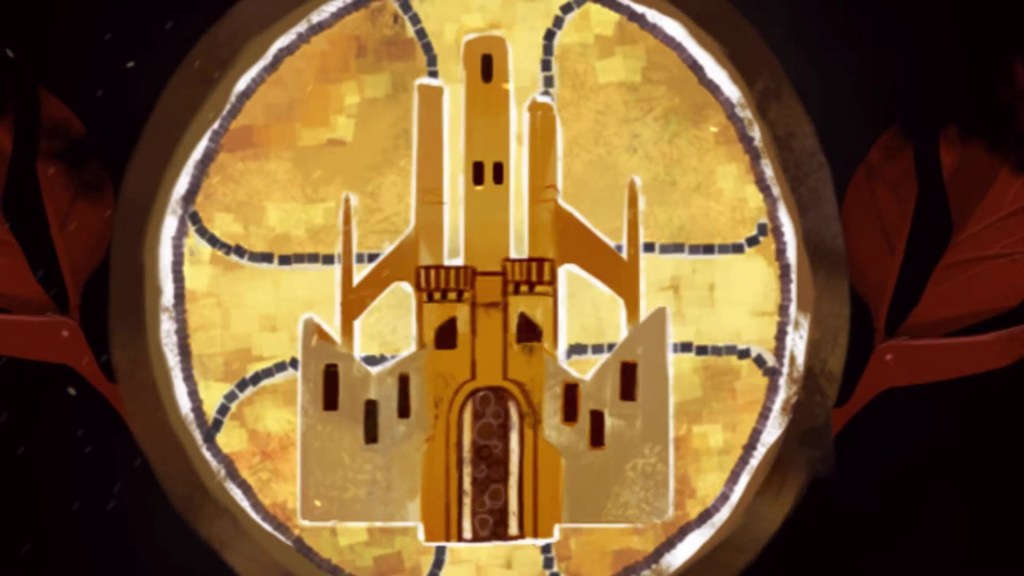
Nine years after I first played it, I found that DAO is my perfect RPG. You see, while I’m no longer desperately trying to escape my own problems (yay for therapy!), I still can’t find the ability or desire to play a self-insert style as I used to in Skyrim. Furthermore, while I still love The Witcher 3, I sometimes want more choice in my roleplaying than that game allows. Surprisingly, DAO seems tailor-made to strike a compromise between the roleplaying styles of these two landmark RPGs, despite being older than both games. DAO owes that sense of balance to its eponymous “origins” system, wherein players choose one of six possible backgrounds for their protagonist. Crucially, each of these origin stories comes with a unique playable prologue that helps the player understand how their character fits into the gameworld. For my return playthrough, I decided to roleplay a character of the city elf origin and was struck by how much his brief prologue changed my experience of the game when compared to my previous self-insert playthroughs.

For context, most elves in the gameworld of DAO live in racially segregated slums inside human urban centres. The city elf prologue makes the abject oppression within these “alienage” slums very clear, starting off much like Braveheart; my character was to be married as per a community arrangement, but an evil, moustache-twirling local lord abducted the bride and several other alienage women for sexual reasons. My character infiltrated the estate to rescue the women – I had him reject the human lord’s bride to leave them behind – forcing a confrontation that killed the bastard. Yet the story diverged from Mel Gibson-schlock when my character’s actions didn’t spark a community uprising. Rather, the alienage seemed divided on whether to rescue the women in the first place, with some of the more embittered elves wanting to leave them and avoid human retribution. As such, my character had little choice but to give himself up to the guard when they inevitably raided the alienage. I knew where the story would go from this point because all the origins end in this way; a member of the Grey Warden order conscripted my character, allowing him to avoid execution in exchange for his service against the rising Darkspawn horde. While the Wardens’ struggle against the one-dimensional Darkspawn drives the main plot of DAO, the most interesting parts of the game concern the player’s involvement in nuanced political and social conflicts as they gather allies to face the horde. I’d resolved these struggles multiple times before, and in most cases, I ended up repeating my earlier decisions. Yet roleplaying a city elf totally changed my perspective on one crucial chapter of DAO.

When the Wardens call upon the dwarven city of Orzammar for military aid, they find that they must help a candidate ascend the vacant throne to receive any troops. The senior claimant is Lord Harrowmont, a relatively honourable man with a strong sense of justice. His rival is one Prince Bhelen, a scheming, cruel, and arrogant SOB. In my earlier playthroughs, when I placed less importance on roleplaying and preferred to go by my personal whims, I always supported Harrowmont because I saw him as the “good” option. Yet roleplaying a city elf character demanded I pay attention to an aspect of dwarven society that I had ignored in previous playthroughs: the caste system. Under this system, a sizable minority of dwarves and their descendants are designated “casteless” and relegated to the slums beneath Orzammar, where they exist as a permanent underclass. I figured that my character would feel some kinship with the casteless, based on his similar life experience in the alienage, and I was pleasantly surprised to find I didn’t have to restrict this affinity to my headcanon. In a conversation with an idealistic dwarf who mentions that the surface races prosper without caste, I was granted an additional dialogue option, in which my elven character could tell the dwarf that “my people are treated much like your casteless.” As to how all this relates to the dwarven power struggle, well, it turned out that while Harrowmont is nice enough on a personal level, he is also a traditionalist who would uphold this oppressive system if given the throne. The opportunistic Bhelen, on the other hand, sees reform as his ticket to power; he would open doors for the casteless, albeit in violent and self-serving ways. In the interest of good roleplaying, I chose to break with my precedent and put Bhelen on the throne instead of Harrowmont. This proved to be an interesting exercise in empathy that changed my personal opinion on the issue; outside of roleplaying, if you asked me about the best choice for Orzammar, I’d now tell you it’s Bhelen.

The dwarven episode is just one chapter of many in DAO, but I chose to recount how I played through it as a city elf because I believe it shows what makes this game so special amongst contemporary RPGs. Skyrim and The Witcher 3 both feature power struggles wherein the player takes on the role of kingmaker. In The Witcher 3, the game presents several reasons as to why Geralt might intervene and aid one candidate over another. While those reasons are interesting and nuanced, they are always Geralt’s reasons; no matter how many times I play The Witcher 3, I can never escape his point of view. In Skyrim, I approached the civil war questline from a myriad of perspectives over many playthroughs, but the game rarely ever integrated those perspectives into the narrative, treating all my characters the same way. DAO gives me several angles of approach, as in Skyrim, while making those perspectives plot-relevant, just as The Witcher 3 does with Geralt. DAO is something like a perfect mad lib, where some words are already present, while other spaces are for you to fill in. The player reads while writing, filling in the empty spaces first with an origin, and building up from there. In 2013, I loved Skyrim because I needed to dream; in 2018, I loved The Witcher 3 because I needed to escape; now, in 2022, I love DAO because I need to write.

 The Third Medium
Leave a comment