
It’s been a few weeks since I finished part one of the Final Fantasy VII Remake, which I’ll just call FF7 from here on out, and I have a complaint. No, it has nothing to do with the changes from the original or the hints that Aerith might survive her confrontation with Sephiroth. Rather, my gripe of the day is entirely focused on Chapter 11: “Haunted,” a chapter largely disconnected from the rest of FF7. As the main cast of Cloud, Tifa, and Aerith move from one location to another in service to the plot, they are held up in a train graveyard by a series of lost spirits who range from bored to outright vindictive. The game attempts to present this departure from its regular gung-ho action tone as spooky, with the oh-so stoic Cloud seeming a little unsettled, while Tifa expresses fear at the prospect of facing down ghostly opponents. When I began Chapter 11, I wish I could’ve told Tifa not to be so afraid, because I guessed that she and her friends would deal with the ghosts in the same way that they had already dealt with countless other foes: by smacking the shit out of them (spoiler alert: I was right).

Beat-em-up gameplay is tonally consistent for most of FF7 because the game treats itself like the action RPG it is. However, when I realized that all I’d have to do in the chapter titled “Haunted” was rely on the same corporeal combat system that I’d been using throughout the game, it sucked out any tension the scene might have had. Before this point, our heroes had already pulled off absurd feats of strength a dozen times over, hacking their way through legions of Shinra security troops and several giant mechs without a hint of fear. Yet when these same characters are required to battle ghosts, they become afraid, and I simply can’t understand why. I can only assume the developers wrote it this way solely because they wanted an excuse for Tifa and Aerith to compete for Cloud’s attention/protection. I suppose if that was the case, then job well done.
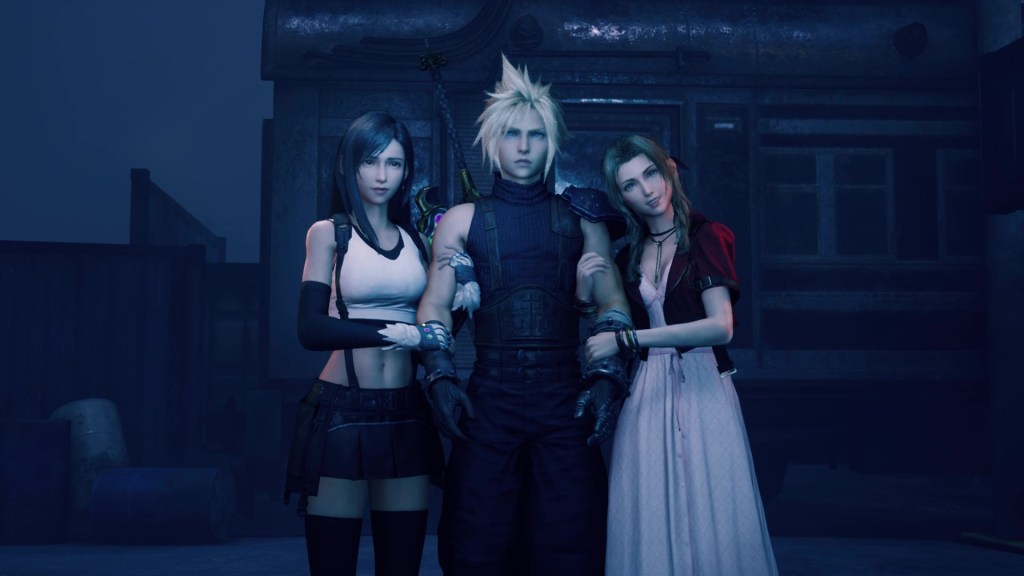
Maybe it’s unfair for me to be picking on FF7 so much; the game was OK overall, and chapter 11 isn’t as bad as my complaint suggests. In fact, there are a few moments where Aerith rescues the narrative a little (as she so often does) by trying to communicate with the ghosts. These encounters reveal that the spirits are of children who died in the train graveyard, presumably killed by the demonic entity whom Cloud & co. face at the end of the chapter, and who taunts Aerith with visions from her own troubled childhood. I still wouldn’t call any of these moments scary, as they’re rather shallow and spread out, but they do give a sense of what makes ghosts frightening. It isn’t just that ghosts are difficult (if not impossible) to combat physically, it’s that to deal with a haunting effectively, one must go beyond the physical and into the relational.
The thing about real haunted places, or at least those real-life places that have a haunted reputation, is that violence is of no use in navigating them. Often these places were once sites of massacre, torture, and abuse; they are physical embodiments of past injustices that continue to affect people in the present. The thing that’s so frightening about the idea of ghosts in a cemetery. They may have been put there by violence, but they can’t be returned to the grave by it. Rather, their unfinished business needs to be carried out, or perhaps it’s that the guilty need to be punished (all the more frightening if YOU’RE the guilty party). It would’ve made more sense for Cloud to be afraid in the train graveyard if the dead children wanted, say, his care. Care is something he’s not nearly as practiced with as his blade.
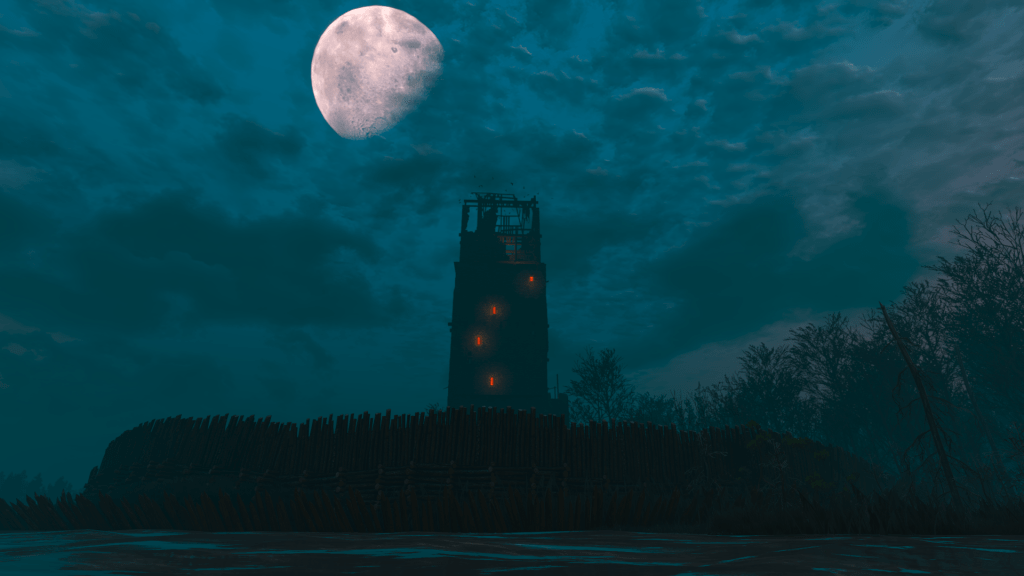
For an action RPG that does haunted spaces really well, see The Witcher 3 and the haunting on Fyke Isle. There, a tower is occupied by the vengeful spirit of Anabelle, a woman abandoned in her hour of need by her lover, Graham. To achieve a happy ending, Geralt must bring Graham back to the tower so the lovers can meet one last time. It’s a tense and frightening moment, not just because of the eerie environment on Fyke Isle, but also because at no point does the outcome feel certain. Like Cloud (and many other avatars), Geralt is skilled with his blade above all else. If it was as simple as whacking Annabelle till she left, we’d know how the story ended before it began. But it’s not that simple. Geralt step out of his combat comfort zone and play couples counselor—a frightening thought if ever there was one. It’s a setup that pulled me in, in a way that Chapter 11 of FF7 didn’t.
Of course, I wouldn’t suggest that Chapter 11 should go quite as dark as the episode on Fyke Isle. That would be too drastic a departure from the game’s usual tone and would prevent a smooth transition back into the main plot. However, I will suggest, free of charge, two methods that action RPG developers can use to add more spook to their story. One: prevent the player from dealing with ghosts in the same way they would face their usual opponents. Even if this fails to scare the player, it at the very least makes the fear of their characters believable. Two: have the player engage with the ghost on an emotional level. This would make the player work toward something that, for a battle-hardened RPG protagonist, is far more frightening than battle: an empathetic resolution.

 The Third Medium
Leave a comment