
Aaaand I’m back! Sorry for disappearing like that, but between school, work, and the pressure of my impending graduation, I had my hands full. But now that I’ve got a free hosting service and an almost-healthy sleep schedule, I’ll start posting as much as possible. I certainly have enough material to post about; I played Fire Emblem: Three Houses non-stop during my hiatus. I was exhausted, and Three Houses didn’t drain me as some of my other favourite games do. I wasn’t sure why that was at first, but I think I’ve figured it out: Three Houses demands very little of the player in its narrative and instead encourages them to take a backseat as NPCs write the story themselves.
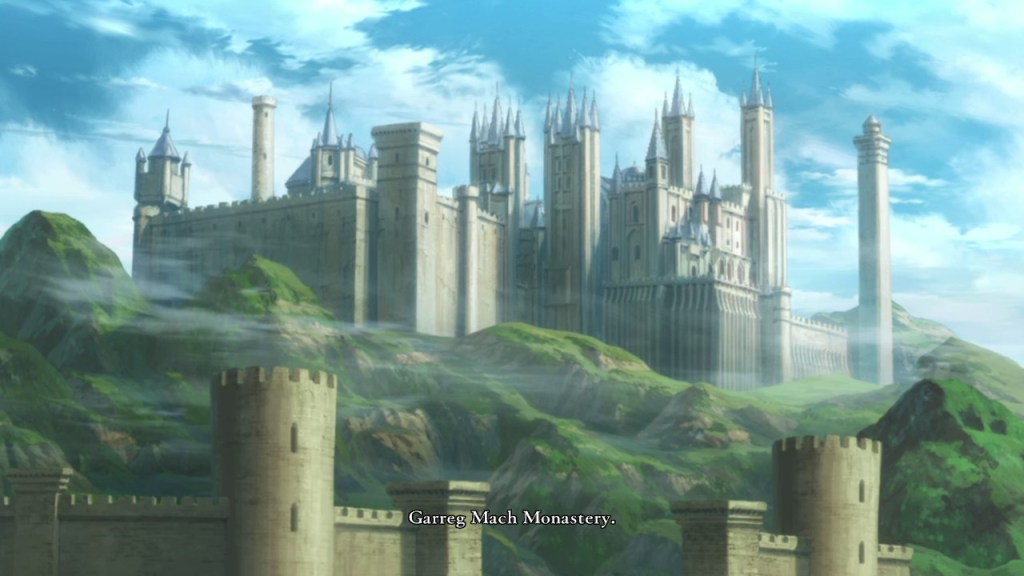
The core gameplay loop of each Fire Emblem installment revolves around the player commanding a group of anime-esque units on a grid, winning battles by defeating the leaders of opposing armies while protecting your own (I once heard someone call the Fire Emblem games “weeb chess.” It’s a solid description). Yet fun as weeb chess can be, the player needs a reason to care about the battles and their outcomes. So, the gameplay loop is supported by a storytelling mechanic aptly dubbed “the support system.” Depending on how the player manages their units on and off the battlefield, the characters will develop relationships with one another that play out in “support” scenes between the various potential pairings. These pairings are usually platonic but can also be romantic and—crucially—do not always involve the player character. With Three Houses, I spent hours upon hours watching interactions between characters in which I had no involvement—and it was fantastic.
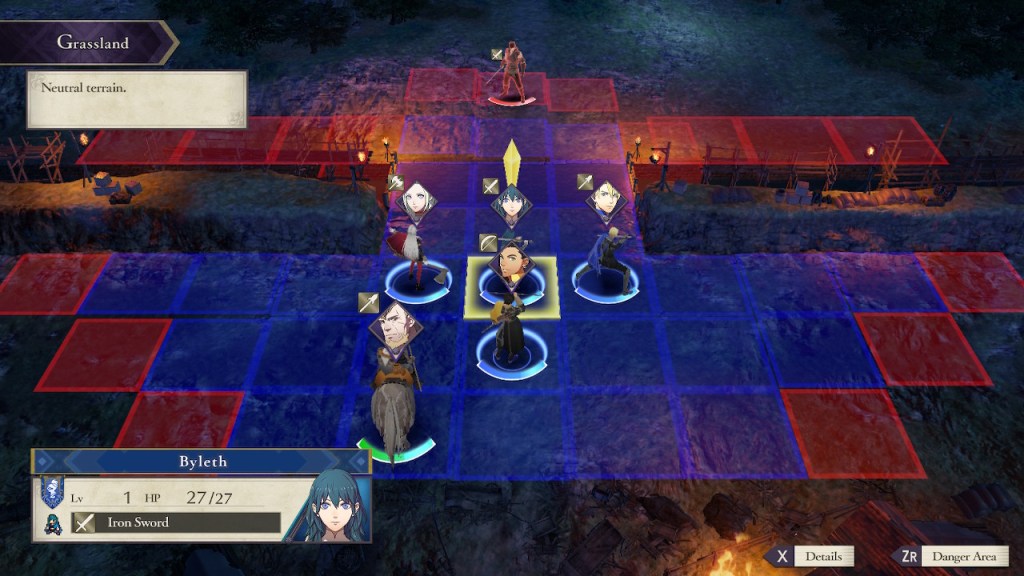
It might seem strange that someone like me, who enjoys such player-centred, dialogue-heavy games as Dragon Age and Mass Effect, would love the Three Houses support system so much. So, I’ll give you an example that shows why. Look at this guy:
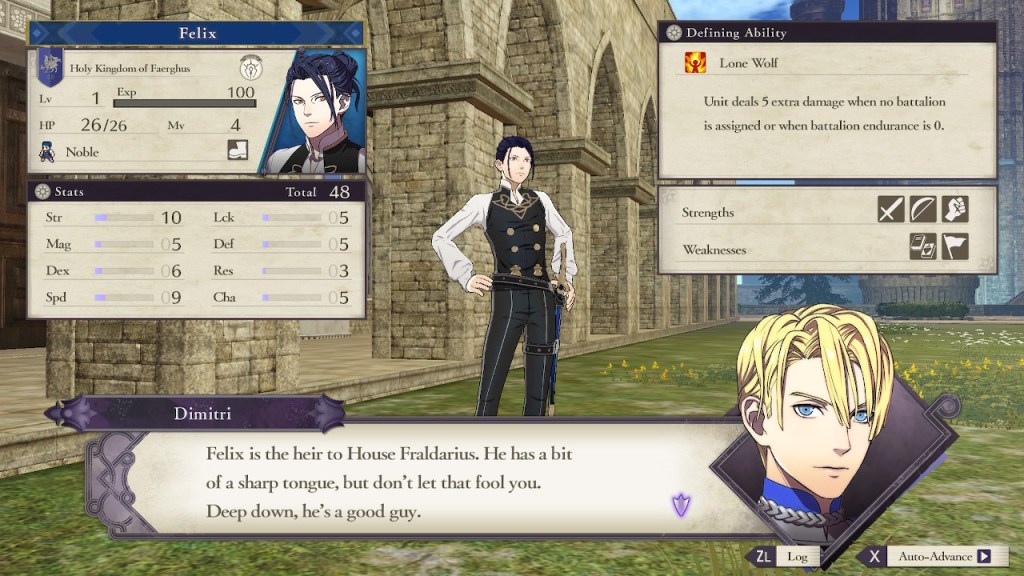
His name is Felix Hugo Fraldarius, and he’s my favourite character from Three Houses. But why I like him is hard to understand at first glance. Felix may be skilled with a sword, yet he pursues swordsmanship with such single-minded devotion that he forcefully and cruelly pushes away those who might distract from his efforts. So not only is he one note, but he’s also kind of a dick. That’s how he first appears anyways, and his support scenes with Byleth (the player character) do little to disrupt these first impressions.
Felix: Grow stronger so you may live, and live to grow stronger. That’s what I was taught.
Byleth: Do you have any other ambitions?
Felix: Why should I? Nothing’s as important as the pursuit of strength. But that’s enough idle chatter. Take out your sword.
Other scenes between Byleth and Felix reveal that he trains so much because of his desire to spar with and defeat his older brother, who Felix says “always won—always—and died before I could win a single bout.” While this adds some depth to Felix’s character in that it explains his obsession with strength, you will never see Felix as anything more than a swordsman through his interactions with Byleth. It makes sense when you think about it, seeing as Byleth grew up as a mercenary and also knows little of life outside of violence. To see a more rounded and dynamic version of Felix, you’d have to look at his interactions with other characters, like Seteth. Seteth is an older church official who encourages Felix to reach out to his peers. He does so over two lengthy scenes, the second of which I’ll feature here:
Seteth: I do not think you have been keeping your friends at a distance because you dislike them personally. Rather, I think what bothers you is their concept of proper knighthood. Is that not so?
[Felix says yes. They discuss]
Seteth: I have heard the story. Your brother was one of the royal knights. He gave his life to defend the prince.
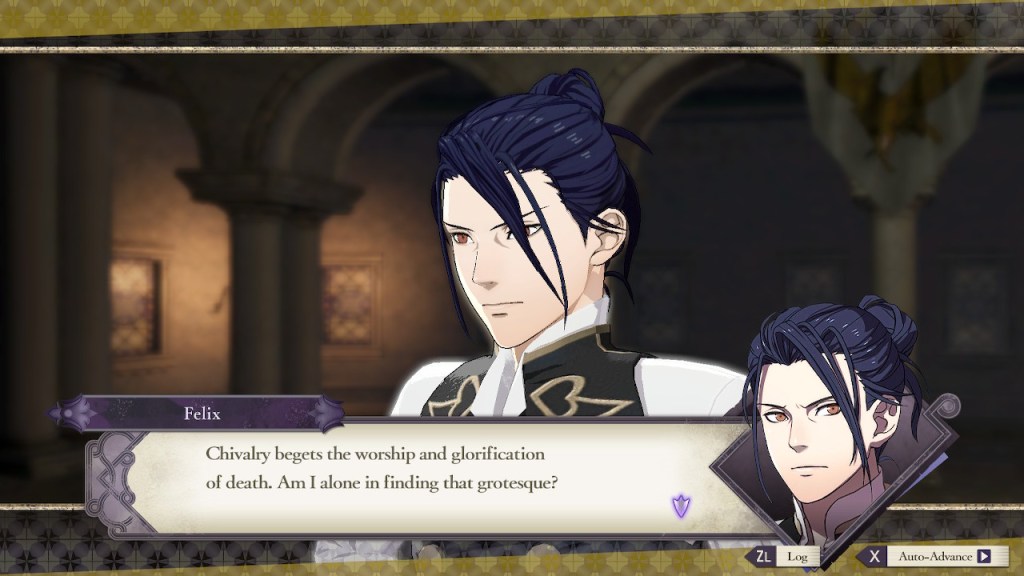
Felix: My brother was doing his job. My father is the real problem. When my brother’s armor was brought back to the castle, do you know what he said? “He died like a true knight.” Chivalry begets the worship and glorification of death. Am I alone in finding that grotesque?
[A few lines pass.]
Seteth: If you hate all those whose beliefs are different from yours, you will hate everyone eventually … You do not have to change your beliefs, of course. But you do have to accept that others feel differently.
[Felix asks why Seteth has told him all this. Seteth replies he is also something of a loner and thought they might get along]
Felix: I see. You’ve gone to so much trouble, I may have to start making an effort as well.
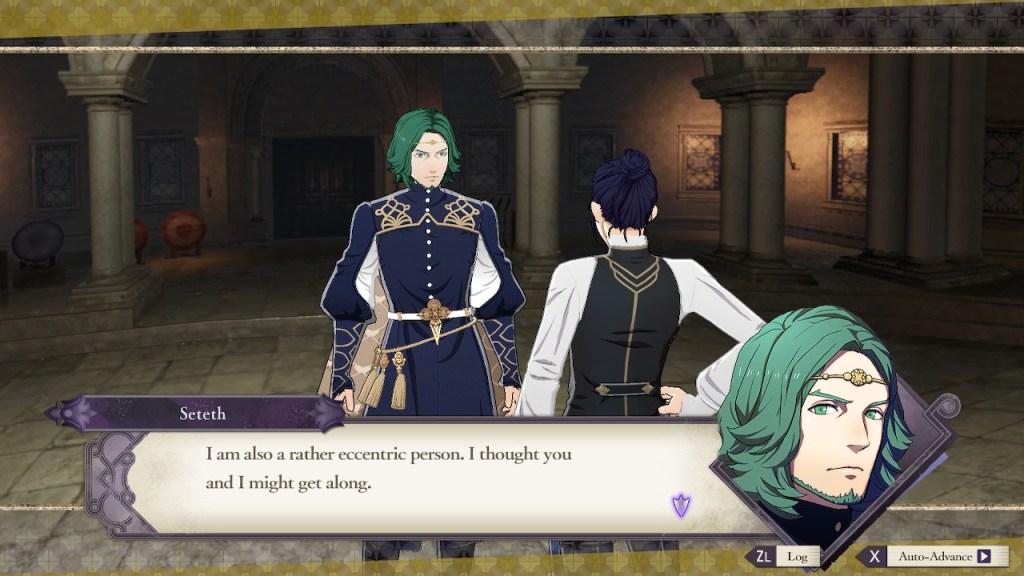
People are shaped by their relationships with others, and nobody of even the slightest interest has only one significant relationship. Just as spouses should probably have friends outside their marriage, NPCs should have relationships outside the player character. In this scene with Seteth, we learn that Felix is more than just a grumpy swordsman with narrow ambitions: he’s a critical thinker who has legitimate grievances with how his society is structured; he cares about others but can’t bear to see them follow them on a path that killed his brother; and he’s willing to change his behaviour if met with someone of equal stubbornness. We wouldn’t learn this if the player intervened in Felix’s every conversation through Byleth. No, all this is only possible because the game asks the player to take a backseat and read. And as the cherry on top, the NPC supports not only flesh out the various characters but can also lead to unexpected developments. For example, in Lysithea’s support chain with Felix, she tries to bake him the perfect cake and cure his intense dislike for sweets; the epilogue for their relationship shows how Felix gives up the mercenary life in favour of becoming a baker.
Just like in my first “Player as Reader” post, I’m not suggesting games should remove player agency. In fact, in that post I claimed that active participation in the story is what most often separates a video game from other narrative mediums like books or movies. I am not suggesting all games should have their own version of the support system either. However, I want to recognize it’s this unique way of building a supporting cast that makes Three Houses and other Fire Emblem games so enjoyable. If I have an exhausting day at school or at work, I’ll usually want to play a video game, but not something so involved that I have to mediate every single character interaction. So I open up Three Houses, do the battling and managing, and then watch the other characters as they support and shape one another. Yup, “weeb chess” really does scratch the itch—after all, I’ll do anything to keep from actually reading an actual book.

 The Third Medium
Leave a comment