
This post will be the first in an on-and-off series where I introduce you to standout characters from across the gaming medium. In each post, I’ll give a general synopsis of the character, tell you what’s so special about them, and why they matter. It’ll be a fun way to pay tribute to the fictional friends we love—and to the enemies we love to hate. Plus, these short features will be a way for me to keep uploading content during busy periods in my schedule. So, without further ado, meet…
Kainé
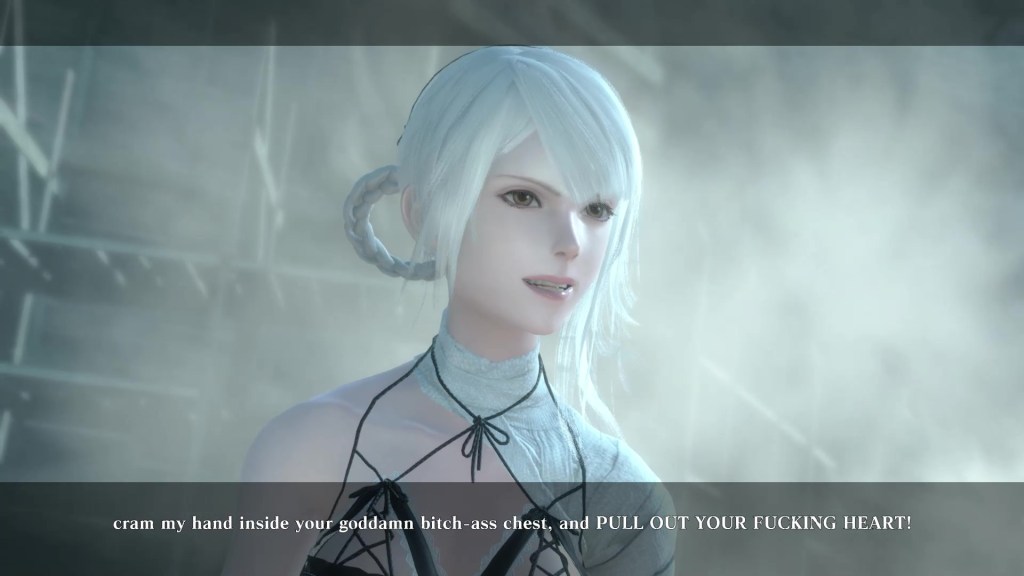
Are you currently being attacked by a half-naked woman who’s screaming profanity while wielding two monstrous cleavers? If the answer is no, then I’m happy to say that this introduction is going better than I expected! But if the answer is yes… well, I’ll just say that it was nice knowing you.

Kainé is a violent, abrasive young woman who stars in NieR Replicant. There, she joins Emil and Grimoire Weiss as they aid the player character in his fight against the shadow monsters [Shades] who seek to possess his sister. Kainé’s immense physical strength and her ability to wield magic come from her own partial possession by one of these Shades, something that engenders the suspicion and mistrust of nearly all those around her. Kainé goes through quite a journey in Replicant; she starts the game as an impromptu boss battle, becomes one of the protagonist’s fiercest allies, and then takes on the role of player character herself during the fifth and final ending sequence. Now that I’ve given you an exposition dump on who Kainé is, it’s time I told you why you should care.
Intentional Representation
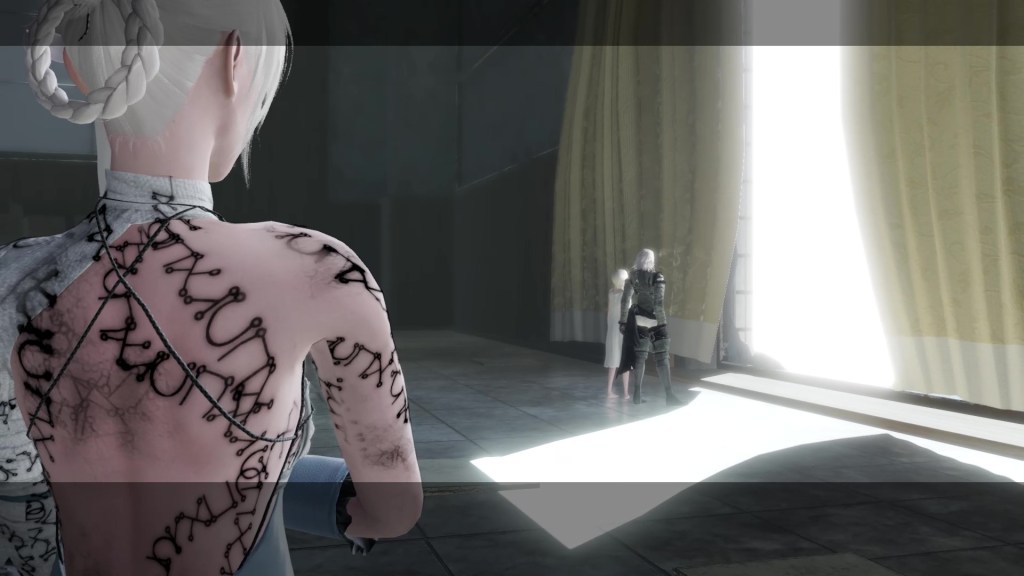
Kainé is intersex, meaning she has physical characteristics that are common to both the male and female sexes. I’ve led with this statement not because it’s all her character is—far from it—but because being intersex is a key part of who she is and the arc she goes through. In fact, the reason I’m starting this feature series by talking about Kainé is that I’ve gotten annoyed with how some people hold up the “happens-to-be” model as the gold standard of representation. Whenever a character is praised as someone who just happens-to-be Queer or happens-to-be Black (those are just two examples), it implies the character is deviating from some default way of being. It also implies that, while one accidental deviation may be OK, it might be unacceptable if Queerness or Blackness was a critical part of the character’s arc. Though the characters in question may be interesting and well-rounded, I’m not a fan of the happens-to-be way of talking about them. More importantly, I believe there are other, equally valid ways to approach representation in fictional media. That’s why I love Kainé so much. She doesn’t “happen-to-be” anything. She is not accidental; she is intentional.
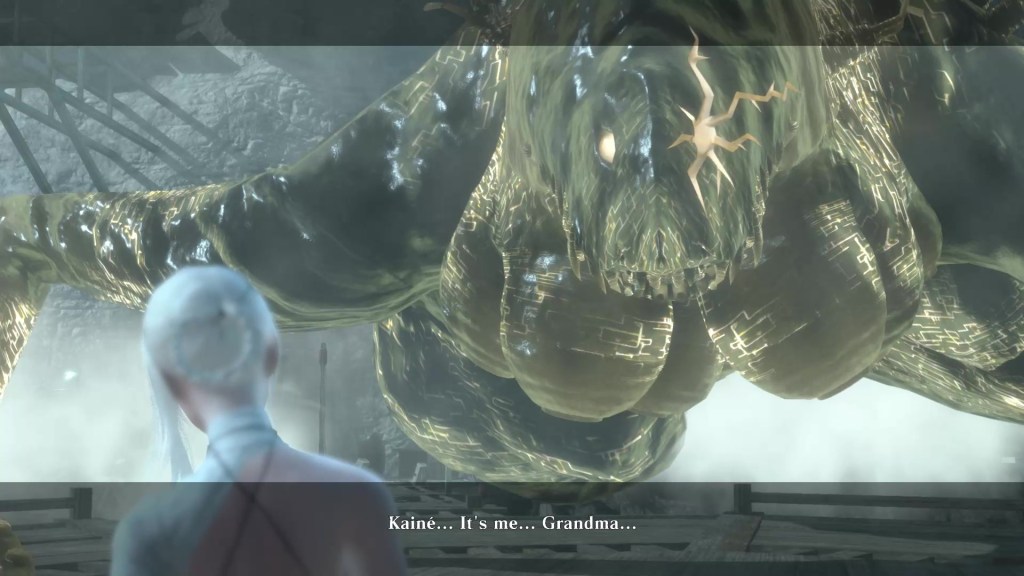
Kainé initially appears to be ostracized because of her possession, and while that’s true in certain cases, Kainé’s in-game novella reveals that she was pushed out of her hometown due to how her body differed from the other villagers. Orphaned and abandoned, nobody stepped forward to care for Kainé except an eccentric old woman named Kali, who disdained and defied her close-minded neighbours at every opportunity. Kali adopted Kainé as her granddaughter, nurturing the young girl and affirming her identification as a “she” where others merely called her “freak.” Kainé in turn adopted some of Kali’s characteristics, such as the latter’s foul mouth and freewheeling philosophy of live and let live. However, continuing the theme of tragedy that pervades Kainé’s life and the works of director Yoko Taro in general (that bastard), Kali was murdered as her granddaughter entered young adulthood. This led Kainé to make her possession pact with a Shade in exchange for the strength to exact revenge, which is where the player character and his party come in; they help Kainé slay her grandmother’s killer, leading her to join them in their doomed war against the Shadowlord.

Avenging Kainé’s grandmother is not the end of her journey; instead, it’s a new beginning. You see, in some ways, Kainé is better at giving her grandmother’s advice than following it herself. For example, when Emil reveals how ashamed he is of his eyes (which cause petrification when he removes his blindfold), Kainé comforts him in this powerful exchange.
Kainé: Your eyes are not a sin. Don’t ever be ashamed of them. They’re a vital part of you. Do you understand?
[Kainé gently brings Emil’s hand to her arm and brings the Shade out from within her]
Emil: What’s this? A Shade? How did you…?
Kainé: This arm is an accursed weapon. I thought I would only need it until I earned my revenge. Once that happened, I figured it was all over. But there’s a reason I’m alive—that my arm is alive. And there’s a reason for your eyes too.
Kainé’s relationship with her grandmother helps her accept the Shade within her, something that in turn enables her to mentor and form bonds with other outcasts. Yet she still has trouble accepting the part of herself that is intersex; when the player character attempts to defend Kainé against the insults of her former neighbours, she tells him that what they say is “all true, anyway.” While this remark is in part Kainé’s way of refusing to play the damsel in distress, it also suggests that marginalization still affects the way Kainé views her intersexuality. It all comes down to the fact that beneath her rough and cynical exterior, Kainé is an empathetic optimist; her joy comes from her relationships, and as she tells Emil, she believes there is a reason for everything. The reason she finds for her “accursed” arm is that it allows her to avenge and protect those she loves. Before the events of Replicant, Kainé hadn’t yet found a reason for her intersexuality that she could accept, especially since it led to so much isolation in the bigoted environment of her childhood. But she keeps searching. In this way, Kainé’s journey is less about changing herself than it is about finding companions who will love her as she is, and who will accept her love in return. And it’s a fucking beautiful thing to watch.

Intentional Representation
Well, even though I said this would be a short-form series, this post went about my normal length. I think it’s just cause I get too enthusiastic about all things Replicant, especially when it comes to Kainé. She’s an all-time favourite and undoubtedly Yoko Taro’s best character. Still, two weeks from now I’ll be overseas, so you’ll definitely be getting a truncated post then. I know exactly who it’ll be about too. Here’s a hint: he keeps things short and sweet, is creepy as all hell, and calls the California wasteland his home.
See you next time!
POSTSCRIPT: There was some controversy regarding Kaine and the new achievement called “Daredevil” features in the remaster of Replicant. Long story short, I think the achievement fucking sucks. If you want a more detailed explanation of the controversy and why the achievement is bad, this article does a decent job at explaining it (though it also appears to conflate intersex and trans issues, which I’m not too sure about). All that being said, I don’t think the achievement diminishes from Kainé’s character or the excellence of her in-game arc.

 The Third Medium
Leave a comment