
Based on the hints at the end of my last post, I’ll bet those of you who are fans of the Fallout series and/or RPGs from the 90s saw this one coming from a mile away. Stick around though; I’m gonna try to add something new to the conversation about this old character. Yes, over twenty-five years since he first stepped (slopped and slithered, really) onto the stage, I’d like to introduce you to…
The Master
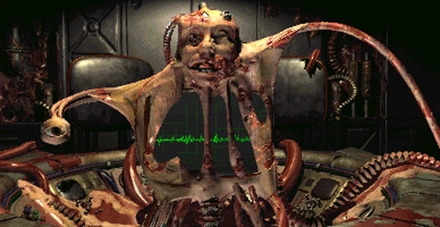
He’s not aged a day since 1997 has he? Not that you’d be able to tell, what with all the tissue damage, mutation, and general creepiness.
The Master is the primary antagonist of the original Fallout game. He is responsible for the rising population of aggressive super mutants. The mutants are humans who’ve changed into green giants of impressive strength and generally limited intelligence through exposure to something called the Forced Evolutionary Virus (FEV). The Master himself was exposed to FEV back when he was a simple doctor named Richard Moreau; after that, he became that horrible mass of tenticles, convinced that the only way of saving humanity was forceable adaptation to the harsh, post-nuclear reality of the Fallout universe. The game tasks you, the Vault Dweller, with stopping this madcap plan of human unification through mutation.
Perfect Villainy
The Master is a great villain, but for different reasons than other antagonists I’ve mentioned about on this blog, such as the Shadowlord from NieR Replicant or Loghain from Dragon Age: Origins. Unlike those two characters, and despite frequent (and concerning) claims to the contrary, the Master is NOT a morally ambiguous character. I don’t know if things have changed since the 90s or something, but I want to make something clear before I go any further: genocide, forced sterilization, and eugenics are always wrong. Besides, if the super mutants are naturally superior—as the Master believes they are—then he’d have no reason to butcher and sterilize ordinary humans as he does throughout the game. The Master is violent by choice, not by necessity. He’s not a good person who does bad things; he fell in the green goo and became cartoonishly evil. End of story.
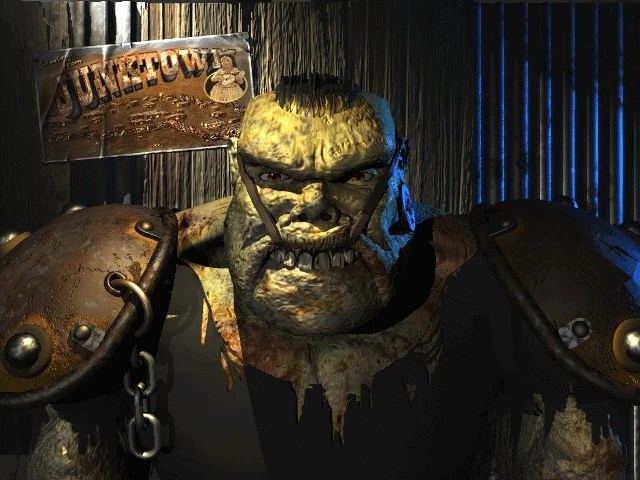
Yet a great villain doesn’t necessarily need moral ambiguity, because the Master has something else: a fantastic character design. To understand how good the design is here, you have to consider the Master’s ultimate goal. He desires complete human unification and the elimination of difference, leading to monolithic peace on earth. It’s is a questionable goal to say the least. Differences between people are what make stories interesting and life worth living, not to mention the fact that monocultures are all too susceptible to stagnation and extinction anyways. The figure of the Master embodies that horrifying vision for the future perfectly. He is a unity in himself, a nauseating amalgamation of human and mechanical parts who speaks in four different voices: one a calm man, one an angry man, one a seductive woman, and one synthetic. Speaking to the Master will make you feel like he’s getting ready to take one of his tentacle suckers and absorb you into his body, your voice into his. It’s a powerful effect that made me want more than anything to stop him, which is pretty impressive considering the player can speak to the Master only once, close to the end of what amounts to a relatively short RPG (my playthrough was around 15 hours). The original Fallout is a simple game that nails its atmosphere of nuclear despair, showing exactly what kind of twisted creatures the Wasteland can produce. We have the Master to thank for that.
TEN…NINE…EIGHT…SEVEN…SIX…
Before I sign off, I have to acknowledge something else that not only made the Master great but also groundbreaking at the time of release. If the player comes prepared and confronts the Master with a holodisk on mutant biology and/or a high enough speech skill, they’ll be able to show him that the mutants are sterile. There is no future for his chosen children. At that point, the mad scientist once more becomes a reasonable doctor; admitting defeat, the Master urges the player to run before detonating a nuke beneath his cathedral. While I’d describe this transformation more as character complexity than moral ambiguity, it definitely adds to the impact of speaking with the Master and makes the encounter that much more memorable.
Oop— bye for now!

 The Third Medium
Leave a comment