
I’m feeling a little lost. I finished my degree in December, and now I’ve entered the waiting period that every university graduate—especially an arts graduate—dreads. I’m waiting to hear back from grad schools, prospective employers, editors, the whole nine yards. Every day that goes by leaves me with more time to imagine new worst-case scenarios; I can almost see that terrible day when AI gets so advanced that it not only writes, but it procrastinates writing. In this non-future, the Terminator isn’t running to take my life, but my job. He’s out there jogging because it helps him get ideas for his next feature piece while I’m sitting in some dive bar wondering why I studied English and not computer science. Don’t worry though! I’d like you to meet someone who recently gave me some hope. Meet…
ARTHUR MORGAN
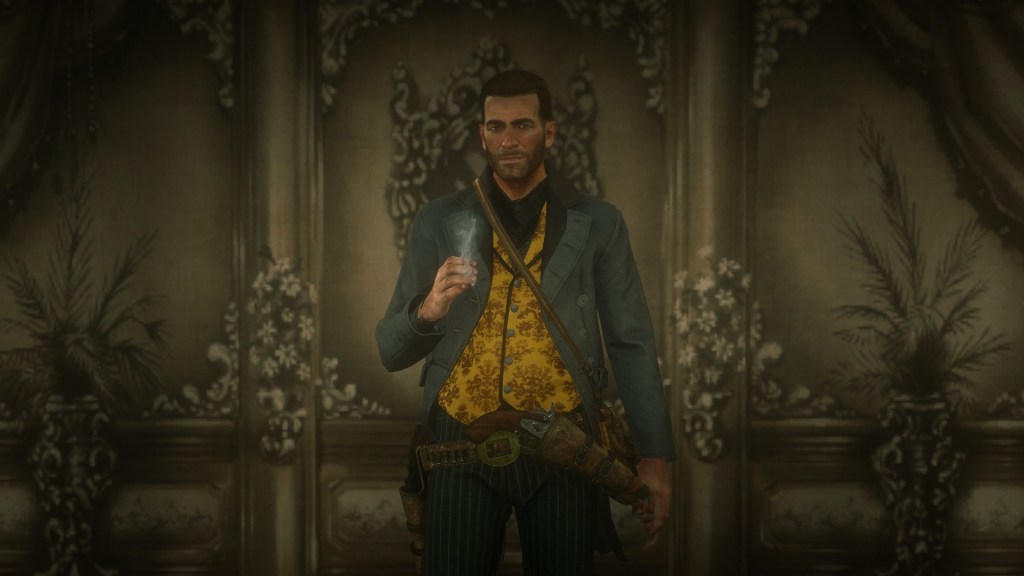
Arthur is the protagonist of Red Dead Redemption 2 (RDR2) and a lifelong member of the Van der Linde outlaw gang. Raised by the gang’s leader, Dutch van der Linde, Arthur is his loyal fixer. The gang is a motley crew: there are the old timers like Arthur, who know no other life; new arrivals who’ve been disenfranchised in the country’s violent industrial expansion; folks with plain bad luck; and a few full-blown psychopaths. After decades of robbing their way across the eastern and central United States, the gang plans to take its treasure pile and escape to the far west, where they aim to purchase land and make good on Dutch’s vague promises of a better America. But when a final heist goes bad, the gang is identified and pursued by the Pinkerton Detective Agency, whose private backing gives them unprecedented reach and resources. Dutch refuses to see the writing on the wall. He insists the gang only needs “one more big score” to set everything right, and he sends Arthur on missions to make that happen.

I immediately connected with Arthur’s gruff attitude and biting (but mostly good-natured) sense of humour. This interaction he has with “Uncle” is a nice introduction to Arthur’s character that had me chuckling:
[Uncle is snoring away in camp. Arthur gives him a kick.]
Uncle: Huh?
Arthur: Careful not to work yourself to death there, Uncle.
Uncle: I was thinking—
Arthur: Does it pay well?
Uncle: *grumbles* Eventually.
[Arthur laughs and puts an arm around Uncle’s shoulder.]
Arthur: So, while the rest of us are busy… stealing, killing, lying… fighting to try to survive… you get to think all day.
Uncle: It’s a strange world we live in, Arthur Morgan.
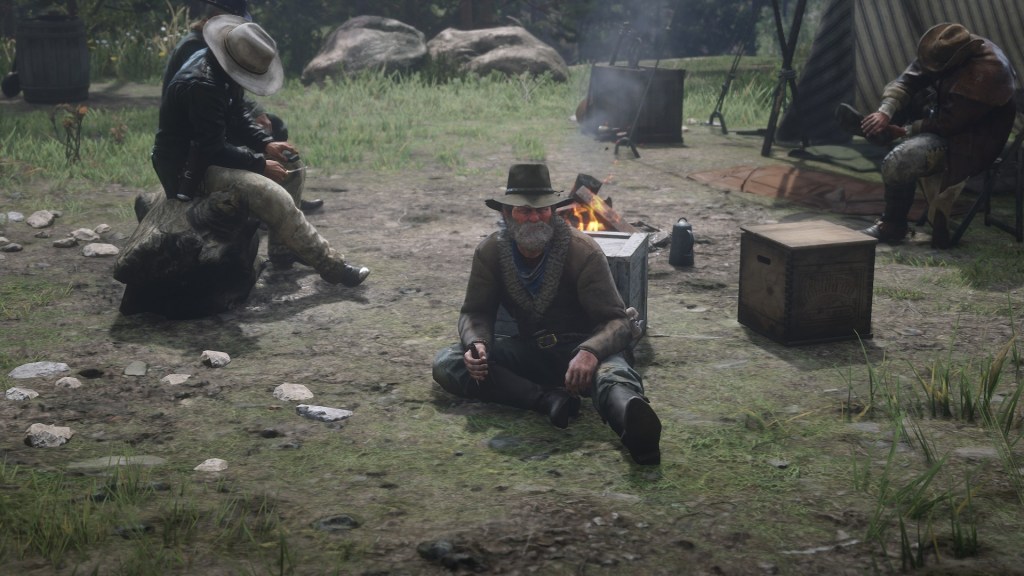
At the end of that day, despite his best efforts to put Uncle to work, it’s Arthur who ends up day drinking with the old man instead. While moments like these were funny, I wasn’t sure what I found so endearing about them. I never connected with any of the leading characters in other Rockstar games like GTA V, and when the cattle hit the corral, isn’t Arthur just another angry misfit with a gun?
CAREER COUNSELLING

Yes, Arthur is often angry and never without a weapon; anybody can see that by glancing at the game’s cover art. But he’s not angry that he doesn’t fit in with society or that others don’t roll out a red carpet to give him what he wants. No, Arthur is angry because he chose the wrong career path. This conversation between Arthur and John Marston at the end of chapter two made that clear to me:
John: Dutch says that we—
Arthur: Dutch says a lot. Now, that’s his gift, saying things.
John: Oh yeah? What do you mean by that?
Arthur: I was the prize pony once, now I’m the workhorse. Listen… Dutch is… but… but, well… you was on that thing in Blackwater. And we already seen Pinkertons here. New century’s coming. This life, this way? Well, we’re the last, I reckon. And we ain’t long for it.
John. Then that’s the way it goes, I guess.
Arthur: For me, yes.
Arthur was raised an outlaw and spends his adult life honing his shooting and stealing skills, assuming for a time that they’d always be enough for him and the gang to get by. That wouldn’t be a crazy assumption in the late nineteenth century as it’s depicted in RDR2. While it’s true that the arm of the law was growing to keep up with the settlement/colonization of the west, RDR2 doesn’t shy away from showing what a violent process that colonization was. Everything and everyone that didn’t conform to a society structured around competing private interests is either crushed or pushed aside. The state inflicts genocide on Indigenous peoples and moves them to reservations. White militias and mobs attack their Black neighbours, valuing nothing but their own petty economic privilege. Industrial elites herd poor folk of all races into deadly mines and factories. While there’s a range of opinions on the degree of sensitivity and nuance that RDR2 applies to these true atrocities (this article fairly critiques how racial violence is used as a backdrop to justify the actions of white protagonists), there seems to be a consensus that the game depicts brutality at all levels of American society. In an environment where people peddle “civilization” through acts of extreme barbarity, I could forgive Arthur for believing that all he needed to make it in the world was a six-shooter and a quick trigger finger.
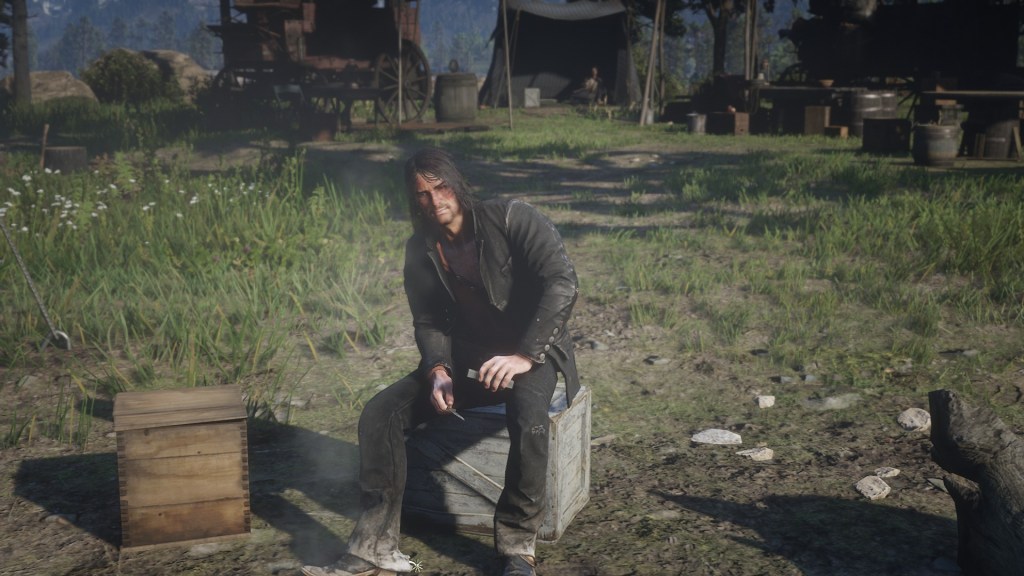
I’m a recent humanities graduate in the twenty-first century. If there’s one thing I’ve learned, it’s how it feels to be John in that moment with Arthur, to be told by someone in a senior position that the times are changing and that maybe it’s time to find a new set of skills. That sentiment isn’t always put so bluntly or in such a pessimistic way—but sometimes it is. I’ve read from more than a few humanities scholars who paradoxically and enthusiastically write about the death of the humanities. Hell, just a few years ago I heard of an English professor who told their lecture hall that an English degree was worthless. Fortunately, I’ve also had professors who didn’t just say, “sucks to be you,” and who build on old arts foundations to create relevant and exciting courses. I’ve also worked under professionals who’ve given me advice on how to fit into a volatile job market (they usually tell me to try to find ways to work with AI instead of under it). These are people who try their damndest to be kind in a world that, like the world of RDR2, is often uncaring, violent, and still all too unequal. These people give me hope that the last four years of my life haven’t been a waste—that they might be redeemed, so to speak. Arthur is that kind of person. As he realizes the madness and futility of Dutch’s dreams, his goal becomes securing a safe exit for John and the young Marston family. It became a comfort to play as Arthur, to help him help others in the violent dawn of modern America.
LEADING FROM THE FRONT
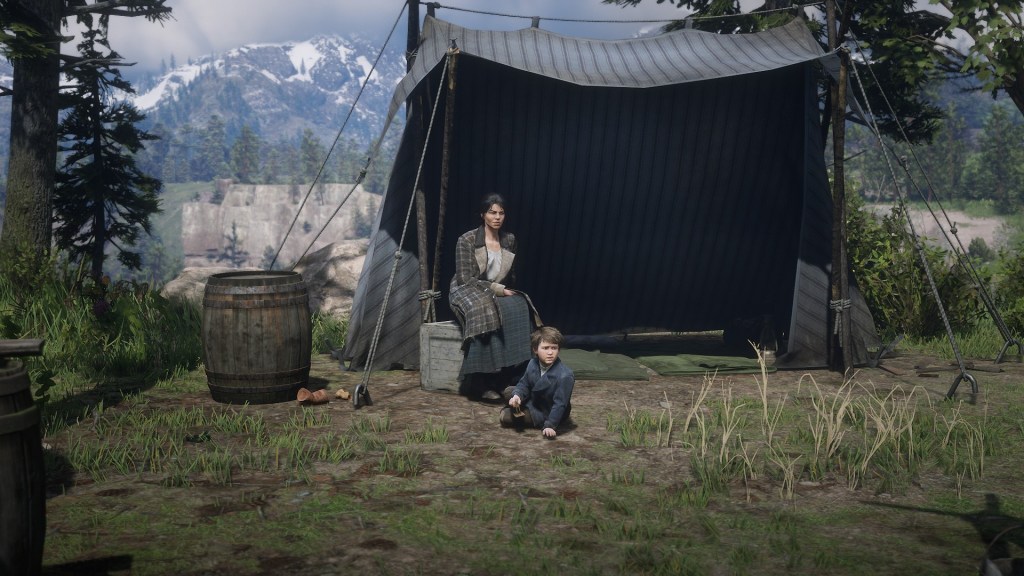
Just to be clear: I’m not saying that everyone more than 10 years my senior is a fossil from a bygone age. It’s not Arthur’s fatalism that I find appealing about him, after all. What I appreciate is his deadpan sense of humour and practical, empathy-driven attitude that he uses to guide the gang through a changing world that their actual leader, Dutch, can’t seem to accept. In my experience, when the man up top (because it still always seems to be a man) fails, it’s been someone further down the line who picks up the slack, getting me through one day of work or study and on to the next one with an assurance that comes from experience. Arthur is like that; one day, I hope I will be too.

 The Third Medium
Leave a comment